
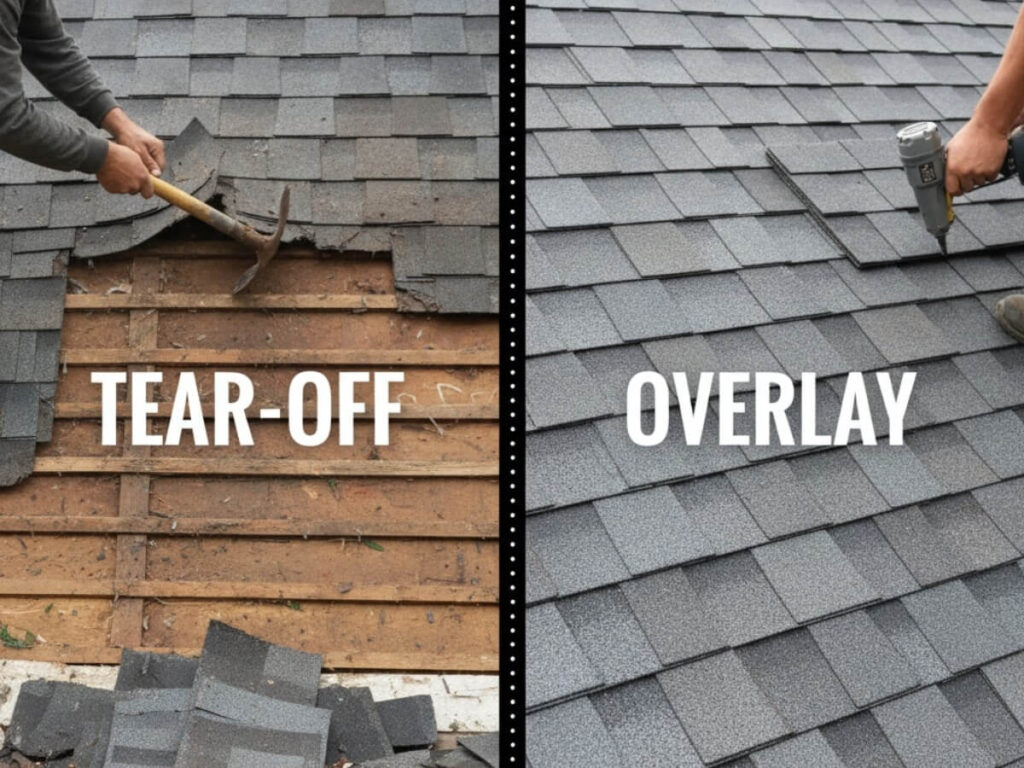
Your roof guards everything under it. When shingles wear out, you face two main paths. One path is a tear-off. The old roof comes off, and a new system goes on clean wood. The other path is an overlay, also called a layover. A new layer of shingles goes over the old layer. Overlay looks cheaper. Tear-off often saves more long term. Both options can block rain for now, but they do not carry the same risk. The wrong call can lead to stains, odor, insurance trouble, and a lower sale price later.
What Is a Tear-Off?
Full Removal Of Old Roofing
A tear-off takes the roof down to the wood deck. Crews remove shingles, nails, felt, flashing, and damaged sealants. With every layer gone, the deck is visible. You can see if the wood is strong, dry, and flat.
Repairing The Deck Before New Shingles Go On
Once the deck is open, soft or rotted areas can be replaced. Solid wood holds nails tight. Weak wood lets nails lift. Lifted nails allow rain to blow under shingles. Fixing bad spots now helps prevent leaks that stain ceilings and soak insulation later.
Fresh Flashing And Better Sealing
A tear-off makes it possible to install new flashing around chimneys, skylights, valleys, and walls. Flashing moves water out of seams. Old flashing can crack or rust over time. New flashing plus modern underlayment guides water off the roof instead of into the attic.
Ventilation Tune-Up
With the roof open, intake and exhaust vents can be improved. Good airflow lowers attic heat and moisture and slows rot in the deck.
What Is an Overlay?
Second Layer Over The First Layer
An overlay keeps the old shingles in place. New shingles get nailed on top. You avoid removal time and dump fees. The first invoice is usually lower, and the house may look new from the street.
Hidden Damage Stays Hidden
Because nobody opens the roof deck, nobody sees if water has already gotten below the first layer. Rot, soft wood, and nail pull-through can stay trapped.
Extra Weight On The Structure
Shingles roofs are heavy. A second full layer adds hundreds of extra pounds across the roof. Older framing or long rafters may sag under that weight. Stress can show up indoors as drywall cracks or nail pops.
More Heat, Faster Aging
Two layers hold more heat. Trapped heat bakes shingles in summer. Hotter shingles age faster and curl sooner. Extra heat can also dry out seal rings at pipe boots and vents. When those rings crack, water can sneak in even if the outer layer still looks smooth.
Cost Today vs. Cost Over Time
Overlay Looks Cheaper First
Overlay work is fast. Crews skip the tear-off and hauling. Labor hours drop. Cleanup drops. You pay less up front.
The Big Bill Comes Later
Most areas allow only two roof layers. After you choose an overlay, the next roof cannot be another overlay. That next job must remove everything at once. Stripping two layers is slow, heavy, and expensive. You delay the cost today but invite a bigger bill later.
Tear-off And Resale Value
Buyers and inspectors ask about roof age and method. A single-layer roof on inspected wood is easy to explain. A double-layer roof can raise doubts. Those doubts can push the sale price down.
Insurance And Leak Claims
Leak claims are usually cleaner with a tear-off install. There is one layer and one clear start date. With two layers, it is harder to prove when water first entered.
How to Choose the Best Option
Look At The Shingle Condition, Not Just The Color
If shingles are curled, cracked, or missing, water has already had chances to get inside. Putting new shingles over damaged shingles will not solve that. In that case, a tear-off is safer because it exposes and repairs the cause instead of hiding it.
Check For Sag Or Soft Bounce
Stand back and sight along the ridge. Do you see dips or waves? Go to the attic and press on the deck between rafters. Soft, spongy, or dark areas often mean moisture trouble. An overlay would trap that problem. A tear-off would reveal it, so it can be fixed.
Think About How Long You Plan To Stay
If you expect to own the home for many years, you usually want fewer surprises. Tear-off builds from clean wood, fresh flashing, and proper airflow. That lowers the odds of leaks, drywall repairs, and attic mold later.
Overlay As A Short Bridge
If you plan to sell soon and the deck still seems solid, an overlay can be a bridge move. You spend less now, and the roof looks newer in listing photos. You accept that the next owner will face the tear-off bill.
Protect Your Home With Intercrus Roofing
Roof work is not only about the number on today’s invoice. It is about risk, structure, and time. A tear-off usually costs more at the start, but it exposes hidden rot, replaces weak wood, refreshes flashing, improves attic airflow, and leaves you with one clean layer instead of two heavy layers. That choice can add years of service and reduce stress during storms, appraisals, and insurance talks. Intercrus Roofing explains deck condition, airflow, flashing, and load in plain terms, then installs carefully.
An overlay can still help in short-term cases, but it leaves old problems sealed under new shingles. Intercrus Roofing helps property owners study roof age, deck strength, ridge lines, and long-term plans. We explain the real tradeoffs so you can spend money most smartly, not just the fastest way. Reach out to Intercrus Roofing for a roof plan that protects the place you live and the value you expect to keep. Our roofing contractors is ready to inspect, explain, repair, and install for you.
Frequently Asked Questions About Tear-Off vs. Overlay
Do I always need a full tear-off?
Not always. If the deck is solid, there is only one layer now, and there are no signs of sag or soft spots, an overlay can work for a short-term plan. Still, a tear-off is usually stronger for long-term value.
Will a tear-off take longer than an overlay?
Yes. Removing and hauling the old shingles takes more time. But that same step is when hidden damage is found and repaired.
Can an overlay affect shingle coverage?
Some shingle makers limit coverage when new shingles go over an older layer. They do this because trapped heat can shorten shingle life. Ask about this before you choose.
Is a two-layer roofing system always allowed?
Most areas allow two layers, not three. After two layers, the next roof must be a full tear-off. That future job can cost more because crews must strip both layers at once.
How do I know which option is best for my home?
Ask for an attic check, deck strength check, and ventilation check. Any soft wood, dark stain, or musty odor means moisture has already moved under the roof. Intercrus Roofing can walk you through those findings and help you pick the smarter path.