When two roof planes meet, water must move fast and safely. This article explains the open vs closed valley roof choice in simple language, so you can compare looks, drainage, risk, and care. You’ll learn how metal-flashed open valleys differ from shingle-covered closed valleys, the role of underlayments, flashing width, and cut lines, why climate and slope matter, and which details prevent leaks. Use these insights to discuss options, set budgets, and plan maintenance with confidence, so your next roofing project protects your home and complements its style. We’ll also highlight practical inspection tips and simple upkeep habits for homeowners.
Open Vs Closed Valley Roof — The Quick View
Open Valley
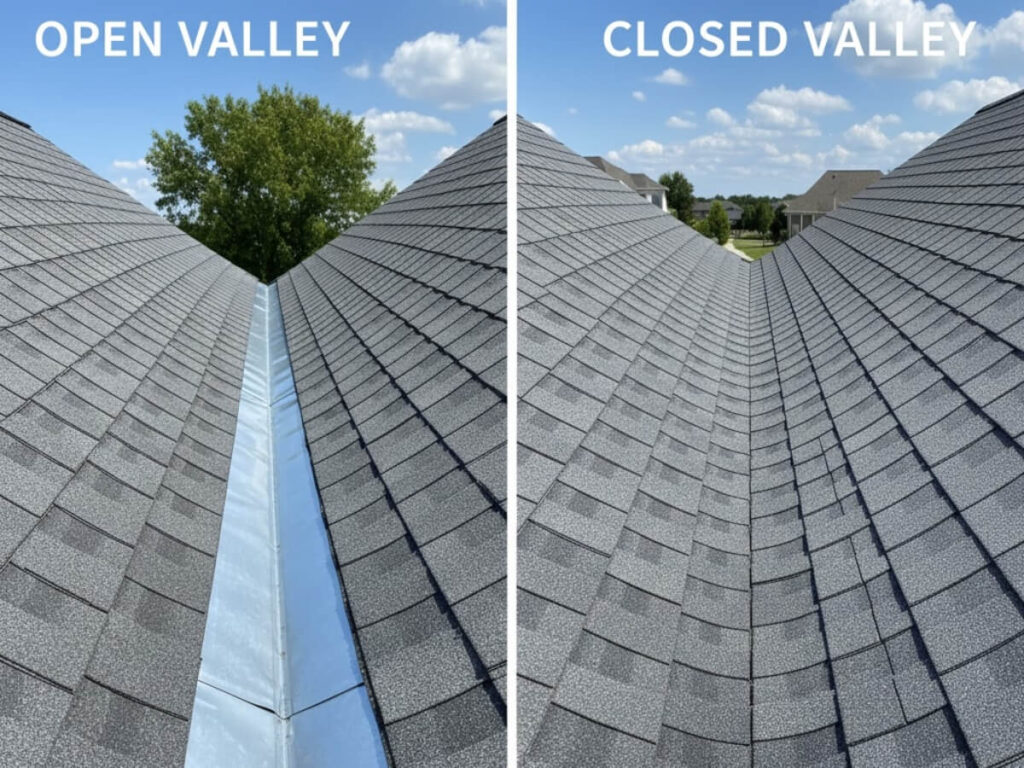
An open valley leaves a strip of corrosion-resistant metal exposed down the valley to form a clear drainage channel. A self-adhered ice-and-water membrane sits beneath. Many guides specify flashing about 24 inches wide, often in a W-profile to block cross-flow and improve water control. It suits complex roofs and storms.
Closed-cut Valley
A closed-cut valley hides the metal by extending shingles from one plane across the valley, then trimming shingles from the other plane to a straight line. It gives a uniform look and uses shingles, but protection relies on the shingles themselves and precise cutting and nailing away from the centerline.
Woven Valley — Where It Fits
A woven valley interlaces shingle courses from both planes across the valley, creating a continuous weave. It can work with flat, flexible three-tab shingles, but thicker laminated shingles may bridge or bulge. Because trapping debris and slow installation are concerns, many pros prefer other methods for long-term performance and repairs.
Underlayment And Ice Barrier Basics
Regardless of type, valleys need a self-adhered waterproofing layer centered in the trough, typically about 36 inches wide. In colder zones, codes may also require an ice barrier. Proper laps, minimal temporary fasteners, and tight placement without bridging create a reliable base before flashing or shingles go on in valleys.
Drainage And Debris Behavior
Valleys concentrate water, leaves, needles, and grit. Open metal valleys form a smooth chute that sheds water and debris efficiently. Closed or woven patterns can slow flow where shingle edges or weaves interrupt the channel. Whatever you choose, keep valleys clear and inspect after storms and heavy shedding seasons. regularly.
Installation & Material Details That Matter
Flashing Metals And Width
Open valleys typically use galvanized steel, aluminum, stainless steel, copper, or zinc alloys. Guides often call for flashing about 24 inches wide; many pros favor a W-rib to keep runoff from crossing the center. Choose thickness and finish that match the expected service life and local environmental exposure. wind, salt, and sun.
Nailing And Cut Lines
Keep nails well back from the valley centerline. Closed-cut methods generally stop the first plane’s shingles short and cut the other plane to a chalk line, with fastening at least six inches from the center. Open valleys are nailed only at flashing edges; exposed nail heads are sealed as required. carefully.
Slope, Climate, And Debris
Roof pitch, rainfall intensity, snow loads, and nearby trees matter. Open valleys provide a clear chute that can help in low-slope sections, heavy-shedding areas, and freeze-thaw climates. Closed-cut can work well on steeper planes with good drainage, but still benefits from clear maintenance paths and preventive cleaning. each season.
Aesthetics And Curb Appeal
Open valleys display clean metal lines; some homeowners like the crisp contrast, others prefer them painted to blend with shingles. Closed-cut valleys hide metal, continuing the roof’s color uninterrupted. Match the approach to your home’s style goals, budget, and the surrounding materials, especially rain gutters, trim, and cladding details. and textures.
Maintenance And Lifespan
Valleys see the highest water volume, so they age faster than field shingles. Open metal valleys resist wash and abrasion well; closed systems may show earlier granule loss where flow concentrates. Whatever the design, keep channels clear, check after storms, and address sealant or shingle damage promptly to prevent leaks.
Five Quick Checks Before Deciding
- Climate and code: In cold or high-rain areas, open valleys with metal and membrane improve drainage. Verify local code and manufacturer instructions for ice-barrier placement and flashing width before choosing.
- Roof design: Complex intersections, long runs, or nearby trees favor open valleys for debris shedding. Simple, steep planes with gutters can use closed-cut valleys with careful layout and nail placement.
- Materials: Architectural asphalt often pairs well with open valleys. Three-tab shingles roof can weave, but many avoid weaving thick laminates to prevent bridging, bulges, and early wear where flow loads shingles.
- Aesthetics and budget: Open metal shows; color-match or contrast. Closed-cut hides metal for a seamless look and may trim material cost, though precise workmanship remains critical for long-term leak resistance.
- Service and maintenance: Choose a design you can inspect and clear. Plan semiannual checks and post-storm cleanups. Keep fasteners back from the center and reseal exposed heads whenever needed promptly.
Choosing the Right Valley Roof for Your Home
Choosing between open and closed valleys comes down to how you want water to move, how your roof is built, and what look you prefer. Open metal valleys create a smooth channel and highlight the roof geometry. Closed-cut valleys keep metal out of sight and continue the shingle color. Both methods work when underlayment, nailing, and cuts follow industry guidance and local code. If storms, long valleys, heavy tree cover, or low slopes are in play, open valleys often make life easier. If your roof has steep planes with short runs and tidy drainage, a closed-cut can perform well.
Intercrus Roofing helps homeowners compare options on real measurements, photos, and budgets. We explain materials, show mockups, and walk you through maintenance that protects the investment. Schedule a roof evaluation with our roofing company to review valley choices, confirm ventilation and flashing details, and build a clear scope. You will get straight answers, careful installation, and a clean finish that looks right from the street and lasts through the seasons. From the first shingle to the final cut line, we follow manufacturer instructions and code, document each step with photos, and keep your property protected with staging, magnetic cleanup, and crew communication.