
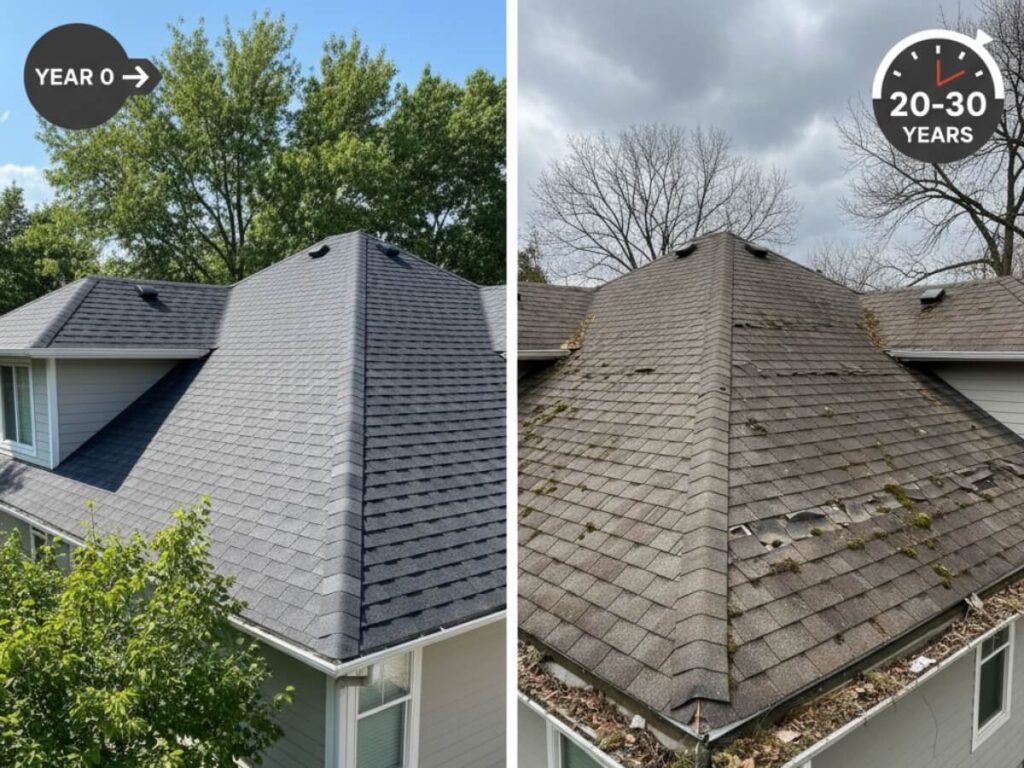
Most homeowners want to know how long a shingle roof lasts before needing replacement. In the U.S., a typical asphalt shingle roof lasts around 20–30 years under normal conditions. However, the exact lifespan can vary widely. Factors like the type of shingles, installation quality, weather, and maintenance all play a role in a roof’s longevity. In this complete guide, we’ll break down the expected lifespan of shingle roofs, what influences their durability, and how you can help extend the life of your roof.
Understanding Shingle Roof Lifespans
Average Lifespan of a Shingle Roof (Asphalt)
For the most common asphalt shingle roofs, the average lifespan is about 20–30 years. Standard 3-tab asphalt shingles, which are the basic flat shingles, typically last on the lower end (around 15–20 years). Thicker architectural shingles can reach about 25–30 years of service life. In ideal conditions with top-quality materials, some premium asphalt shingles might last up to 40 years. Keep in mind these are averages – if your roof faces harsh weather or poor upkeep, it could age faster, whereas mild climates and good care can help it reach the upper end of its lifespan.
Lifespans of Different Shingle Types
Different roofing materials last different lengths of time. Here are the common types of “shingle” roofs and how long they typically last:
Three-Tab Asphalt Shingles (15–20 Years)
Three-tab shingles are the most basic asphalt shingles. They are affordable but have the shortest lifespan, usually around 20 years or less in real-world conditions. Their lightweight construction means they may wear out by about 15–20 years, especially if exposed to severe weather or intense sun.
Architectural Asphalt Shingles (25–30 Years)
Architectural (dimensional) shingles are thicker and more durable than 3-tab. They often come with 30-year manufacturer warranties, and realistic lifespans of 25–30 years are common. These premium asphalt shingles have multiple layers, which helps them last longer. In fact, some high-end designer asphalt shingles can even approach 40 years of service with excellent care.
Wood Shingles and Shakes (20–40+ Years)
Wood shingles or shakes (e.g., cedar) offer a natural look and can last anywhere from 20 to 40 years or more with proper maintenance. Their lifespan really depends on upkeep: regular cleaning, sealing, and replacing split shingles can push wood roofs toward the higher end of that range. In dry climates, cedar roofs tend to last longer, while in wet climates, they may age faster due to rot or algae.
Metal Shingles (40–70 Years)
Metal roofing (available in shingle or panel form) is known for exceptional durability, often lasting 40 to 70 years. Additionally, metal shingles resist many causes of wear — they won’t rot or crack, and they hold up well against extreme weather. Because of this, a metal “shingle” roof (such as stamped metal tiles) can outlast multiple generations of asphalt shingles, making it a long-term investment.
Slate Shingles (50–100 Years)
Natural slate is a premium roofing material that looks like stone (because it is!). A real slate shingle roof can last a century or more. Many slate roofs in historic buildings are well over 100 years old. Slate is extremely durable against rain and sun. Its main drawback is the high cost and weight (the roof structure must be strong enough), but in terms of longevity, slate is one of the longest-lasting options.
Clay or Concrete Tile (50+ Years)
Clay and concrete tiles are not “shingles” in the asphalt sense, but they are common roofing materials with long lifespans of around 50 to 100 years. Tiles are popular in warm climates (like the Southwest US) for their durability and heat resistance. A properly installed tile roof can easily last half a century or more. Like slate, tiles are heavy and can break under impact, but they handle sun and weather exceptionally well over decades.
Factors Affecting Shingle Roof Longevity
Even with good material, how long your roof lasts depends on several key factors. Below are six major factors that affect a shingle roof’s lifespan:
Climate and Weather Exposure
Local climate has a huge impact on roofing. Harsh weather conditions can shorten a roof’s life. For example, intense UV sunlight can bake and dry out shingles, causing them to age faster. Heavy rain and humidity might lead to moisture damage or mold. Snow and ice can cause ice dams and add weight, straining the roof structure. High winds or hail can physically damage shingles. Homes in areas with extreme weather (storms, hurricanes, very hot or cold temperatures) will likely need roof replacements more often than those in mild climates.
Installation Quality
A roof is only as good as its installation. Poor installation work can significantly reduce a roof’s lifespan. If shingles are not properly nailed or if flashing and underlayment are installed incorrectly, problems like leaks or shingle blow-offs will occur. An improperly installed roof may start failing in just a few years. On the other hand, a professional installation — correct alignment, adequate fasteners, proper flashing and sealing — ensures the roof can reach its full life potential. Always use an experienced, reputable roofing contractor for installation to avoid premature roofing issues.
Attic Ventilation
Proper roof and attic ventilation is crucial for roof longevity. Ventilation allows hot air and moisture to escape from the attic. Without enough vents, heat and humidity build up under the roof, effectively cooking the shingles from underneath. This can lead to shingles curling, cracking, or aging faster than normal. In winter, poor ventilation can contribute to ice dams (as trapped warm air melts snow unevenly). A well-ventilated attic keeps the roof deck cooler and drier, which helps shingles last longer.
Attic Insulation
Closely related to ventilation, adequate attic insulation also helps maintain your roof’s health. Good insulation keeps excessive heat from escaping living spaces into the attic and prevents warm air pockets that could cause condensation. In cold climates, insulation is key to avoiding ice dams by keeping the roof colder. By preventing heat buildup and moisture accumulation, proper insulation works hand-in-hand with ventilation to extend shingle life. It also improves energy efficiency in your home as a bonus.
Maintenance and Repairs
Regular maintenance can significantly extend a shingle roof’s life. Neglect is one of the leading causes of premature roof failure. Simple tasks make a big difference: for example, keeping roof gutters clean so water drains properly and doesn’t back up under shingles. Removing debris like leaves, branches, or moss from the roof prevents moisture retention that can deteriorate shingles. Periodic roof inspections (or at least checking after storms) help catch small issues such as a missing shingle or minor leak before they turn into big problems. Promptly fixing loose shingles, replacing caulking, or repairing flashing can easily add several years to the roof’s lifespan.
Roof Design (Slope and Orientation)
The physical design of the roof also plays a role in longevity. Roofs with a steeper slope tend to shed water, snow, and debris more effectively, which reduces the risk of water pooling or leaks. A roof that quickly sheds moisture is less likely to suffer water damage or rot over time. Additionally, the roof’s orientation relative to the sun matters. For instance, sections of the roof that face south or west get more intense sunlight and may age a bit faster (UV rays can degrade shingle materials). Meanwhile, sections in constant shade might stay cooler but could accumulate more moss or algae in humid climates. While you can’t easily change your roof’s orientation or pitch, it’s useful to know how they affect wear – it can guide you to pay extra attention to certain areas during maintenance.
Tips to Extend Your Roof’s Lifespan
No roof lasts forever, but good maintenance and habits can help you get the maximum life out of your shingle roof. Here are some practical tips to help extend your roof’s lifespan:
- Schedule Regular Roof Inspections: Have a professional inspect your roof about once a year, and after major storms. Early detection of issues (like loose or damaged shingles) allows for prompt repairs before they worsen.
- Keep Gutters Clean and Clear: Clogged gutters can cause water to back up onto the roof edge, leading to rot or leaks. Clean out leaves and debris so that rainwater and snowmelt drain properly away from your roof.
- Trim Overhanging Tree Branches: Cut back any branches that hang over your roof. Overhanging limbs can drop leaves and twigs onto the roof, or scrape against shingles in the wind, damaging the granule coating. Limiting tree debris and shade on the roof also helps prevent moss growth.
- Address Any Damage Promptly: If you notice missing shingles, cracks, minor leaks, or any damage, fix them right away. Small problems can quickly escalate if water infiltrates. Replacing a few shingles or patching a leak is much cheaper and easier than dealing with widespread rot or interior water damage later on.
- Ensure Proper Attic Ventilation: As mentioned, make sure your attic has sufficient ventilation (ridge vents, soffit vents, etc.). This isn’t a one-time task, but periodically check that vents aren’t blocked by insulation or debris. Good airflow will protect your shingles from premature aging.
- Consider Protective Roof Treatments: In some cases, applying a roof coating or treatment can add a layer of protection. Reflective roof coatings, for example, can shield shingles from UV rays and reduce heat build-up. There are also shingle rejuvenation products that restore oils to older asphalt shingles to prolong their life (if your roof is aging, you might explore these with a professional). Always consult with a roofing expert to choose appropriate products for your roof type.
How Long Will Your Roof Last?
In summary, most asphalt shingle roofs last around 20–30 years in the U.S., but the lifespan of any shingle roof can vary significantly based on material and other factors. High-quality materials like metal, slate, or tile can last much longer than basic shingles. Climate and weather exposure, installation quality, attic ventilation, and maintenance practices are all critical in determining whether your roof reaches the upper end of its lifespan or needs replacement sooner.
The good news is that homeowners have a lot of control over some of these factors. By choosing durable shingles, hiring experienced installers, and staying on top of maintenance, you can maximize your roof’s life and protect your home for decades. If you’re unsure about your roof’s condition or remaining years, consider getting a professional assessment. Experts (like our team at Intercrus Roofing in Seattle) can inspect your roof and guide maintenance or repairs to help ensure your shingle roof lasts as long as possible. With proper care, a shingle roof will reliably shelter your home and family for many years before the next replacement is needed.